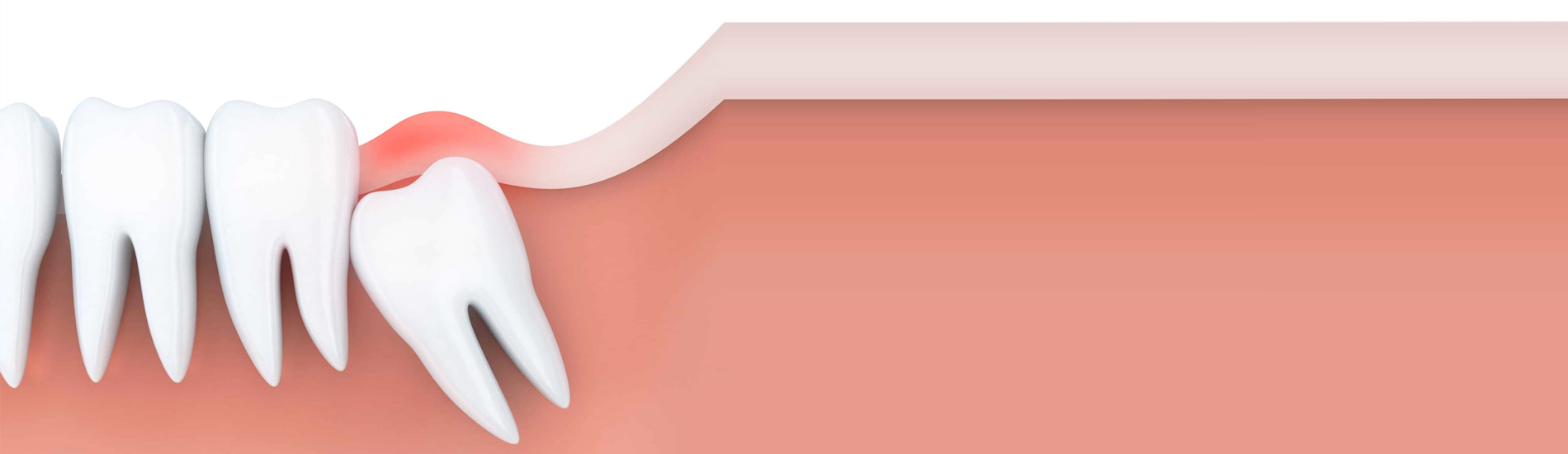

The last teeth to emerge in the mouth are wisdom teeth. Wisdom teeth do not need to be extracted when they are in good alignment, and the gums are healthy. Regretfully, this is not often the case. When the wisdom teeth are unable to emerge normally in the mouth, they must be extracted. They could develop sideways, partly protrude from the gum, or possibly stay stuck under the bone and gum. As they search for a route that would enable them to erupt properly, impacted teeth may take on a variety of locations inside the bone.
Numerous issues may arise from these impacted teeth that are not in the proper place. The gap around the teeth when they partly erupted enables germs to proliferate and ultimately results in an infection. Swelling, stiffness, discomfort, and sickness are the outcomes. The pressure exerted by the emerging wisdom teeth may cause other teeth to shift and interfere with the tooth's natural or orthodontic alignment. The most severe issue arises when cysts or tumors develop around the impacted wisdom teeth, destroying the jawbone and good teeth in the process. These issues are often resolved when the problematic impacted teeth are removed. Early removal is advised to reduce the surgical risk associated with the treatment and prevent similar issues in the future.
Wisdom tooth extractions are often carried out under general anesthesia or intravenous sedation. Before the operation, you will be informed of these alternatives and the surgical risks (such as injury to the sensory nerve or problems from the sinuses). The gum is sutured after the teeth are extracted. Bite down on the gauze that has been put in your mouth to assist stop the bleeding. Until you are prepared to be transported home, you will rest at our Georgetown dentist office under our care. Your postoperative package will come with postoperative instructions, a prescription for painkillers, and perhaps antibiotics after you are discharged. Do not hesitate to give us our Georgetown dentistry a call if you have any inquiries.